
LSA & FFA Inspection Requirements for Vessels
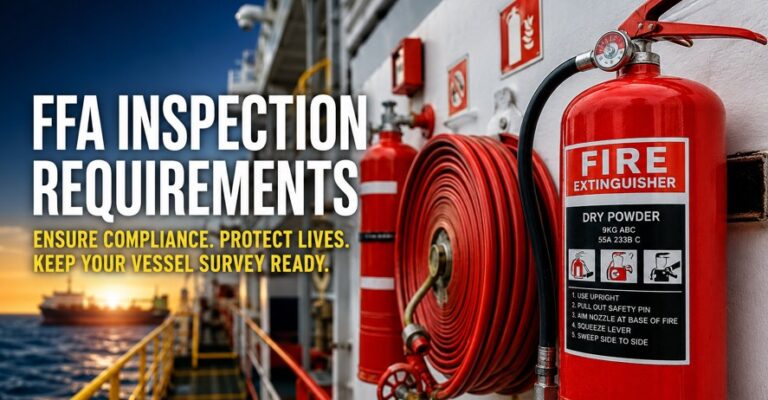
Fire onboard a vessel remains one of the most serious emergencies at sea. While ships may carry sophisticated firefighting systems, equipment alone does not guarantee safety. Proper FFA inspection, testing, certification, and maintenance are essential to ensure every system functions when it is needed most.
For vessel owners, managers, chief engineers, and operators, understanding FFA inspection requirements is critical for maintaining compliance with AMSA regulations, class requirements, and international maritime safety standards.
What Is an FFA Inspection?
FFA (Fire Fighting Appliances) inspections involve the examination, testing, servicing, and certification of onboard firefighting equipment to verify that systems remain operational and compliant.
Marine FFA inspections typically cover:
- Portable fire extinguishers
- Fire hoses and hydrants
- Fireman’s outfits
- Self-contained breathing apparatus (SCBA)
- Fixed CO₂ fire suppression systems
- Foam systems
- Water mist systems
- Dry powder systems
- Fire detection and alarm systems
- Release mechanisms and safety controls
Regular marine firefighting equipment inspections ensure vessels comply with:
- AMSA requirements
- SOLAS regulations
- Flag State requirements
- Classification society standards
- Manufacturer recommendations
Why FFA Inspections Are Important
Firefighting systems are considered safety-critical equipment. A vessel may appear compliant on paper, but outdated certificates, damaged equipment, or incomplete servicing can result in:
Vessel Detention
Deficiencies discovered during Port State Control or AMSA inspections may lead to delays and detention.
Failed Surveys
Class surveyors expect firefighting systems to be maintained and properly documented.
Crew Safety Risks
Malfunctioning firefighting equipment can significantly increase the consequences of onboard fires.
Operational Delays
Unexpected repairs and emergency service requirements often create expensive downtime.
Routine marine FFA inspections help vessels remain operational, compliant, and ready for emergencies.
Common Causes of FFA Compliance Failures
Most deficiencies are not caused by catastrophic failures but by routine maintenance issues.
Typical problems include:
- Expired fire extinguisher servicing
- Damaged or leaking fire hoses
- Corrosion on cylinders
- Missing or unclear identification tags
- Incomplete service records
- Expired breathing apparatus cylinders
- Incorrect release arrangements
- Deteriorated foam concentrate
- Missing signage or labels
Documentation issues alone can create compliance concerns even when equipment appears physically sound.
Portable Fire Extinguisher Inspection Requirements
Portable extinguishers are among the most frequently inspected items onboard.
Inspection normally includes:
Physical Condition
Inspectors verify:
- Corrosion
- Damage
- Mounting arrangements
- Accessibility
Pressure Status
Units must remain fully charged and ready for use.
Service Intervals
Regular servicing and hydrostatic testing must comply with manufacturer and regulatory requirements.
Identification and Tags
All extinguishers must display:
- Service dates
- Instructions
- Certification tags
Keeping extinguishers compliant reduces the risk of deficiencies during AMSA or class surveys.
Fire Hoses and Hydrants
Fire hoses are essential emergency equipment and require regular inspection.
Checks generally include:
- Hose condition
- Couplings and fittings
- Nozzle operation
- Hydrant integrity
- Accessibility
- Pressure testing where required
Damaged hoses or missing fittings are common causes of survey findings.
Fireman’s Outfits and Breathing Apparatus
Self-contained breathing apparatus (SCBA) and fireman’s outfits require regular maintenance.
Inspections cover:
SCBA Cylinders
- Cylinder pressure
- Hydrostatic test dates
- Physical condition
Face Masks and Demand Valves
Inspectors check:
- Seal condition
- Functionality
- Wear and deterioration
Protective Clothing
- Helmets
- Gloves
- Boots
- Safety lights
Maintaining breathing apparatus is essential for crew safety and regulatory compliance.
Fixed Firefighting Systems
Fixed suppression systems require specialized inspection and servicing.
These may include:
CO₂ Fire Suppression Systems
Typical checks involve:
- Cylinder weighing
- Release controls
- Pipework condition
- Warning alarms
- Cabinet inspections
Foam Firefighting Systems
Inspection includes:
- Foam concentrate analysis
- Pump performance
- Proportioning equipment
- Piping and valves
Water Mist Systems
Technicians verify:
- Nozzles
- Pumps
- Control arrangements
- Detection interfaces
Dry Powder Systems
Checks generally cover:
- Cylinder pressures
- Release mechanisms
- Hoses and piping
These systems often have annual, intermediate, and five-year inspection requirements.
Why Documentation Matters
Marine inspectors do not simply look at equipment.
They also verify:
- Service reports
- Certificates
- Test records
- Maintenance history
- Equipment identification
Poor record keeping can result in deficiencies even if equipment is fully operational.
A complete documentation package helps vessels pass:
- AMSA inspections
- Flag State surveys
- Class surveys
- Client audits
- Port State Control inspections
Preparing for Marine FFA Inspections
Proactive maintenance reduces costly downtime.
Review Equipment Registers
Verify:
- Service dates
- Certificates
- Inspection intervals
Conduct Physical Checks
Look for:
- Missing nozzles
- Corroded extinguishers
- Damaged cabinets
- Low-pressure cylinders
Address Minor Defects Early
Simple repairs such as:
- Signage replacement
- New seals
- Brackets
- Labels
can prevent larger issues during surveys.
Plan Ahead
Do not wait until survey week. Early preparation allows sufficient time for:
- Testing
- Certification
- Spare parts
- Rectification work
Common FFA Defects Found During Surveys
Marine inspectors frequently identify:
- Expired extinguishers
- Damaged hoses
- Missing fittings
- Outdated certificates
- SCBA cylinders overdue for testing
- Incorrect release arrangements
- Incomplete records
- Poor labelling
- Foam concentrate degradation
These issues may seem minor, but they can lead to:
- Survey delays
- Vessel detention
- Off-hire periods
- Increased repair costs
Choosing the Right Marine FFA Service Provider
Professional FFA inspection support should provide:
Inspection and Testing
Comprehensive verification of firefighting equipment.
Certification
Proper documentation for AMSA, class, and flag requirements.
Defect Rectification
Fast repairs to minimize operational disruption.
Marine Industry Experience
Understanding commercial vessel operations and survey expectations.
Australian Compliance Knowledge
Familiarity with AMSA requirements and local port operations.
Keep Your Vessel Ready with Professional FFA Inspections
Firefighting equipment is only effective when it has been properly inspected, tested, and certified. Maintaining compliance with FFA inspection requirements protects your crew, vessel, and commercial operations.
At Nautix Marine Solutions, we provide professional marine FFA inspection services, certification support, and defect rectification for commercial vessels operating throughout Australia.
GET A LOAD TESTING QUOTE
Need Marine Load Testing?
✔ Ship Cranes
✔ Gangways
✔ Accommodation Ladders
✔ Davits
✔ Lifting Equipment
Need Help? Talk to Nautix Marine