
LSA Inspection and Servicing
Why Life-Saving Appliances Are Critical for Vessel Safety and Compliance
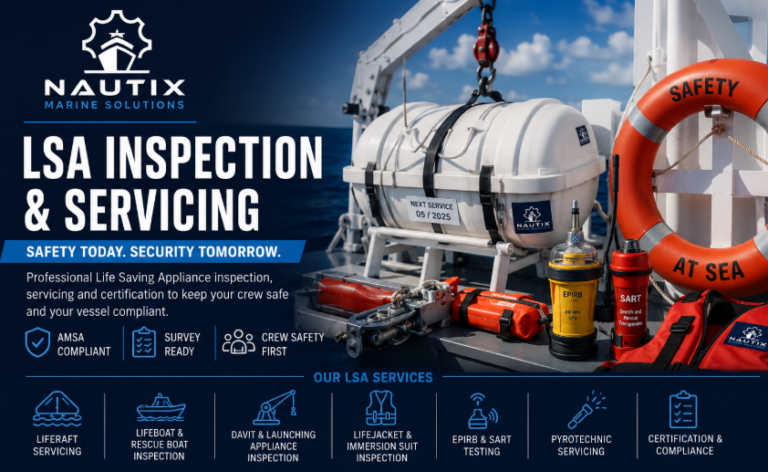
A vessel’s emergency equipment is only valuable if it works when lives depend on it. Liferafts, lifeboats, rescue boats, EPIRBs, immersion suits and launching systems are designed to protect crews during the most critical moments at sea. However, without proper LSA inspection and servicing, these life-saving appliances can quickly become a liability rather than an asset.
For vessel owners, managers, operators and chief engineers, maintaining Life Saving Appliances (LSA) is about far more than ticking a compliance box. Proper servicing ensures vessel readiness, crew safety, regulatory compliance and operational continuity.
What Is LSA Inspection and Servicing?
LSA (Life Saving Appliances) inspection and servicing involves the maintenance, testing, certification and periodic overhaul of emergency equipment carried onboard commercial vessels.
Marine LSA equipment typically includes:
- Liferafts
- Lifeboats
- Rescue boats
- Launching appliances and davits
- On-load and off-load release mechanisms
- Lifejackets
- Immersion suits
- EPIRBs (Emergency Position Indicating Radio Beacons)
- SARTs (Search and Rescue Transponders)
- Line-throwing appliances
- Pyrotechnics and distress signals
- Emergency batteries and lighting
Regular servicing ensures these systems remain compliant with:
- AMSA regulations
- SOLAS requirements
- Flag State requirements
- Classification society rules
- Manufacturer recommendations
Why LSA Servicing Is Essential
Life-saving appliances are exposed continuously to:
- Saltwater
- UV radiation
- Humidity
- Corrosion
- Vibration
- Long periods without use
Even equipment that appears serviceable may have hidden deterioration or expired certification.
Professional LSA inspection and servicing provides:
Enhanced Crew Safety
Emergency equipment must perform immediately when required.
AMSA Compliance
Proper documentation helps avoid deficiencies during inspections.
Survey Readiness
Maintaining current certificates supports class and statutory surveys.
Reduced Operational Downtime
Early identification of defects prevents unexpected delays.
Lower Long-Term Costs
Preventative maintenance is significantly cheaper than emergency repairs or vessel detentions.
What Does Marine LSA Inspection Cover?
Liferaft Inspection and Servicing
Liferafts are among the most critical survival systems onboard.
Inspection includes:
- Inflation cylinder testing
- Hydrostatic release unit checks
- Emergency pack verification
- Structural condition assessment
- Inflation tests
- Expiry dates
- Certification review
Expired liferafts are one of the most common deficiencies discovered during vessel inspections.
Lifeboat and Rescue Boat Inspection
Lifeboats and rescue boats require regular functional testing.
Inspection generally covers:
Hull Condition
Checking for:
- Cracks
- Corrosion
- Structural damage
Engines and Batteries
Verification of:
- Starting arrangements
- Fuel systems
- Charging systems
- Battery condition
Bilge Systems
Ensuring pumps and drainage systems remain operational.
Loose Equipment
Inspection of:
- Oars
- Water supplies
- Survival rations
- First aid kits
- Emergency tools
Proper lifeboat servicing ensures readiness during abandon ship emergencies.
Davit and Launching Appliance Inspection
Davits and launching systems are exposed to harsh marine environments.
Routine inspections include:
- Wire rope condition
- Sheaves and bearings
- Winches
- Brakes
- Lubrication
- Structural integrity
- Release systems
Corrosion or worn components can create major safety risks.
EPIRB and SART Testing
Emergency electronic devices require periodic verification.
Inspections include:
- Battery expiry dates
- Physical condition
- Registration details
- Functional tests
- Hydrostatic release units
These systems are critical for search and rescue operations.
Immersion Suits and Lifejackets
Inspection includes:
- Fabric condition
- Seals and zippers
- Retro-reflective tape
- Lights and whistles
- Inflation cylinders
- Storage arrangements
Damaged immersion suits may fail when crews need them most.
Common Deficiencies Found During LSA Inspections
Many vessels experience similar issues:
Expired Liferafts
Missed service intervals are among the most common problems.
Corroded Davits
Corrosion and inadequate lubrication can affect launch capability.
Expired Hydrostatic Release Units
HRUs often expire unnoticed.
Faulty Release Hooks
Incorrect adjustment can create safety hazards.
Battery Failures
Rescue boats and EPIRBs frequently suffer battery-related issues.
Missing Equipment
Loose gear and emergency supplies are sometimes incomplete.
Documentation Gaps
Incomplete records can lead to compliance deficiencies despite functional equipment.
These issues may result in:
- Survey delays
- Vessel detention
- Operational interruptions
- Increased repair costs
Crew Checks vs Professional LSA Servicing
Weekly and monthly onboard inspections are important, but they do not replace formal servicing.
Crew checks focus on:
- Accessibility
- Cleanliness
- Visible damage
Professional LSA servicing involves:
- Detailed inspections
- Functional testing
- Manufacturer procedures
- Certification
- Documentation
- Periodic overhauls
Some equipment requires approved facilities and specialist technicians.
Planning LSA Servicing Around Vessel Operations
The most effective operators plan servicing ahead of:
- AMSA inspections
- Annual surveys
- Port State Control visits
- Mobilisations
- Dry dockings
- Offshore campaigns
Early planning allows sufficient time for:
- Spare parts procurement
- Repairs
- Certification
- Rectification work
Reactive maintenance often results in unnecessary schedule pressure and higher costs.
AMSA Compliance and LSA Inspection
Australian commercial vessels face increasing scrutiny from regulators.
Proper LSA inspection and servicing supports:
AMSA Surveys
Ensuring compliance with National Law and international standards.
Port State Control Inspections
Reducing detention risks.
Classification Society Surveys
Supporting statutory and annual survey requirements.
Client Audits
Providing confidence to charterers and operators.
Maintaining life-saving appliances should form part of a broader vessel compliance strategy rather than being treated as an isolated task.
Signs It May Be Time to Replace LSA Equipment
Not all equipment should continue through repeated repair cycles.
Replacement may be more economical when equipment suffers from:
- Severe corrosion
- Obsolete components
- Recurring failures
- Limited manufacturer support
- Expired certification
Modern equipment improves reliability and reduces maintenance costs over time.
Choosing the Right Marine LSA Service Provider
A competent marine service partner should provide:
Inspection and Testing
Professional assessment of all life-saving appliances.
Certification
Supporting AMSA, class and statutory requirements.
Defect Rectification
Rapid repair solutions to minimise downtime.
Technical Expertise
Understanding manufacturer requirements and survey expectations.
Australian Marine Compliance Experience
Knowledge of local regulations and operational realities.
Keep Your Vessel Safe, Compliant and Survey Ready
At Nautix Marine Solutions, we understand that life-saving appliances are not just equipment—they are the last line of defence when emergencies occur.
Our experienced marine professionals provide:
✔ LSA Inspection and Servicing
✔ Liferaft and Lifeboat Inspections
✔ Rescue Boat and Davit Maintenance
✔ Certification Support
✔ Defect Rectification
✔ Pre-AMSA Inspection Preparation
✔ Australia-Wide Marine Compliance Services
By maintaining your vessel’s life-saving appliances to the highest standards, we help ensure crew safety, regulatory compliance and uninterrupted operations.
GET A QUOTE
Need Marine Load Testing?
✔ Ship Cranes
✔ Gangways
✔ Accommodation Ladders
✔ Davits
✔ Lifting Equipment
Need Help? Talk to Nautix Marine